Mexico’s art history is marked by paintings that merge national identity, social messages, and strong visual styles. For collectors, these works offer a chance to own pieces that helped shape Mexican culture and continue to perform well in the art market. Whether your focus is narrative murals, surreal self-portraits, or sweeping landscapes, each famous painting carries a distinct style and provenance that add real value to a serious collection.
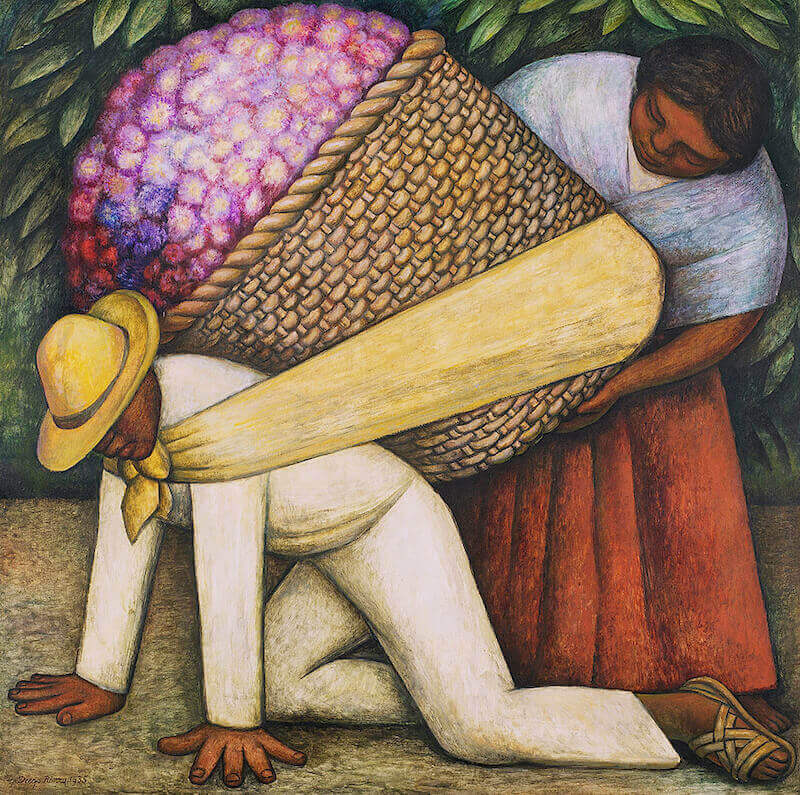
Diego Rivera’s Flower Carrier (1935) exemplifies social-realist style in a compact canvas. The bold figures—set against rough, earthy backgrounds—reflect Rivera’s large-scale mural work in a more intimate format. Thick brushstrokes and clear outlines give the image a sculptural feel, while the bright sash across the worker’s back highlights themes of labor and dignity. For collectors, original Rivera easel paintings and preparatory sketches remain highly prized, with strong auction records and institutional interest ensuring lasting value.
One of Mexico’s most iconic self-portraits, Frida Kahlo’s The Two Fridas (1939) blends surreal symbolism with personal narrative. The mirror-like composition shows two versions of Kahlo seated together, joined by a shared vein and holding surgical scissors and a portrait. Rich, flat colors and detailed costume elements draw on folk art traditions, while the open heart imagery speaks to themes of identity and emotional pain. Although the major canvas belongs to the Museo de Arte Moderno, related sketches and studies surface occasionally, commanding premium prices among collectors of female modernists.
José María Velasco’s Valley of Mexico from the Hill of Santa Isabel (1882) represents 19th-century academic landscape painting at its finest. Accurate atmospheric perspective and meticulous rendering of vegetation show Velasco’s scientific approach to nature. Romantic lighting bathes the valley in a golden glow, evoking national pride in Mexico’s natural beauty. Collectors seeking historical depth often acquire smaller studies and watercolors by Velasco; their rarity and clear provenance make them steady performers at specialized auctions.
David Alfaro Siqueiros pushed the limits of muralism into experimental territory with works like Portrait of the Bourgeoisie (1939). Although conceived for large walls, Siqueiros created oil studies on canvas that survive in private hands. He used industrial paints, spray techniques, and a dynamic composition of overlapping figures to criticize wealth and power. The resulting visual energy—sharp angles, bold colors, and political content—appeals to collectors drawn to avant-garde movements and socially engaged art.
José Clemente Orozco’s The Trench (1931) captures human struggle in his signature expressionist style. Heavy contours and stark contrasts of light and dark lend the scene a dramatic intensity, while fluid forms suggest movement and chaos. Though originally a mural fragment, Orozco’s preparatory oil sketches offer a glimpse of his powerful draftsmanship. These studies appear rarely at auction, making them coveted additions for those who value emotional force and historical significance in mural-era works.
Rufino Tamayo’s Women of Tehuantepec (1939) bridges Mexican folk tradition and modern abstraction. Simplified figures stand against broad fields of muted color, their faces rendered with calm dignity. Tamayo’s use of textured paint and refined palette gives the composition a sculptural depth without overt political messaging. For collectors, mature-period canvases like this one hold strong market appeal, combining decorative versatility with a clear modernist pedigree.
María Izquierdo’s Still Life with Parrot (1938) highlights her unique blend of naïve expression and folk art influence. Bold outlines, flat color areas, and carefully arranged objects—fruits, pottery, the bright-plumed parrot—create a sense of quiet ceremony. Izquierdo’s work avoids the grand narratives of her male peers, instead celebrating everyday Mexican life through vivid, intimate scenes. As academic interest in female artists grows, her paintings and watercolors are rising in desirability and value.
Gerardo Murillo, known as Dr. Atl, painted Tropical Landscape near Tacámbaro (1928) in an impressionist-inspired style that emphasizes Mexico’s volcanic terrain. Thick impasto captures the rough texture of rocks and trees, while high-key colors evoke the heat and light of the region. His plein-air approach lends authenticity, and subtle shifts in hue bring the landscape to life. Collectors of early Mexican modernism prize these atmospheric works for their pioneering role in moving landscape painting toward abstraction.
Diego Rivera’s Dream of Malinche (1947) merges historical narrative with mythic realism in a layered composition. Softly modeled figures float above a sweeping landscape, evoking both legend and colonial history. Rivera’s use of muted earth tones and balanced composition gives the scene a timeless quality, while the luminous flesh tones highlight his mastery of fresco techniques adapted to canvas. Though large murals remain in public buildings, smaller oil studies and serial lithographs tied to this theme are highly sought after for their rarity and storytelling power.
Collecting Mexican masterworks means understanding the distinct styles—from the social realism of Rivera and Siqueiros to the surreal intimacy of Kahlo and Izquierdo, and the formal elegance of Velasco and Tamayo. Provenance, condition, and rarity drive market value, so securing works with clear ownership histories and expert authentication is key. By focusing on these famous paintings and their stylistic nuances, collectors can build portfolios that are both culturally rich and financially robust.
Related Articles