Mexico’s art legacy is anchored by painters whose work combines national identity, social commentary, and vivid imagination. For art collectors, Mexican painting offers both historical depth and dynamic market movement. This list of ten key figures spans 19th-century landscapes to 20th-century murals and contemporary surreal visions, each presenting unique opportunities for a discerning collection.
Diego Rivera (1886–1957) stands as the most influential Mexican muralist. His large-scale frescoes, commissioned by governments and institutions across Mexico and the United States, portray the struggles and triumphs of working-class life. Rivera’s bold compositions and strong colours remain highly sought after in private sales and museum acquisitions. Collectors prize his easel paintings and preparatory sketches, which show his hand at a smaller scale but still command top prices at major auction houses.
Frida Kahlo (1907–1954) transcended her time through introspective self-portraits that blend surreal symbolism with personal narrative. Kahlo’s intimate canvases address identity, pain, and Mexican folklore, making them instantly recognizable worldwide. Though many of her major paintings reside in public institutions, smaller works and preparatory studies still appear on the market and often exceed estimates. Kahlo’s star power continues to drive strong performance in exhibitions, publications, and private sales.
José Clemente Orozco (1883–1949) used dramatic light and dark contrasts to depict human conflict and social injustice. His murals in Guadalajara, Mexico City and Dartmouth College offer a somber counterpoint to Rivera’s optimism. As a collector, acquiring an Orozco easel painting or study provides both historical weight and relative rarity—his works seldom come to auction, and when they do, they attract deep interest from institutions and private buyers alike.
David Alfaro Siqueiros (1896–1974) pushed muralism into experimental territory, using spray guns, industrial paints and abstract forms. His politically charged murals in Mexico City and New York blend dynamism with social critique. While large murals are anchored in public spaces, Siqueiros’s canvases and lithographs surface periodically at specialized Latin American sales. Collectors value these studio works for their technical innovation and strong provenance.
Rufino Tamayo (1899–1991) forged a path between Mexican tradition and international modernism. His textured surfaces, rich earth tones and stylized figures draw from indigenous motifs without overt political messaging. Tamayo’s market has grown steadily, with works appearing at Sotheby’s New York and Christie’s London. Paintings from his mature period combine abstract backgrounds with bold central forms, making them versatile pieces that suit a variety of interiors and portfolios.
María Izquierdo (1902–1955) was the first Mexican woman to hold a solo exhibition in the United States. Her vibrant still lifes, village scenes and portraits celebrate everyday life with a folk-inspired simplicity. Izquierdo’s relatively small body of work and growing academic interest have increased demand among collectors focused on female modernists. Her paintings and watercolours offer both cultural resonance and competitive pricing compared to her male contemporaries.
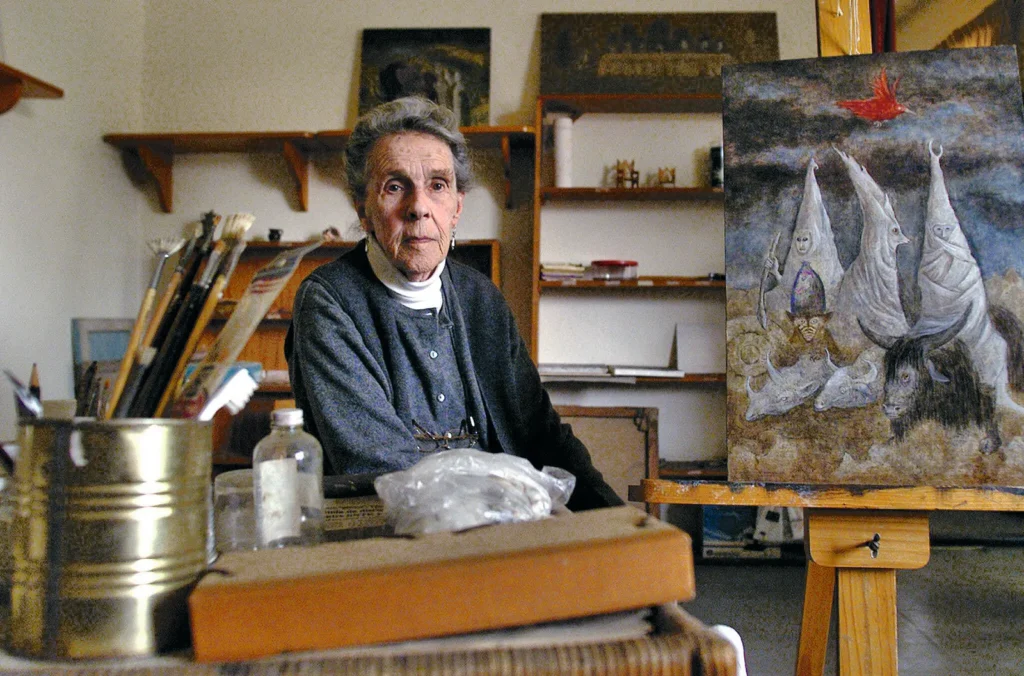
Leonora Carrington (1917–2011) brought surrealist fantasy to Mexico after fleeing Europe in 1940. Her dreamlike canvases teem with mythical creatures, alchemical symbols and lush vegetation. Carrington’s legacy is now firmly recognized through major retrospectives at Tate Liverpool and the Museo de Arte Moderno in Mexico City. Original oil paintings and illustrated manuscripts remain highly prized by collectors of 20th-century surrealism, commanding premium bids at auction.
Remedios Varo (1908–1963) combined precise draftsmanship with esoteric themes in her surreal works. Inspired by science, mysticism and alchemy, Varo’s scenes of floating figures and labyrinthine interiors create a poetic, otherworldly atmosphere. Her paintings rarely appear at public sales, making them scarce and desirable for collectors dedicated to the golden age of Mexican-based surrealism. When they do come up, they often exceed pre-sale expectations.
Dr. Atl (Gerardo Murillo, 1875–1964) was both painter and pioneer in Mexican landscape art. He captured volcanoes, rural villages and indigenous life with strong brushwork and vivid hues. Dr. Atl’s early 20th-century works trace Mexico’s natural wonders and helped inspire muralists that followed. His canvases and watercolours are increasingly collected for their historical significance and their role in shaping Mexican visual identity.
José María Velasco (1840–1912) established Mexican landscape painting with panoramic views of the Valley of Mexico. His precise compositions and attention to atmospheric detail convey both scientific observation and romantic allure. Velasco’s monumental canvases are held in major Mexican museums, but smaller studies and sketches still reach the market. For collectors, Velasco offers a direct link to 19th-century academic artistry and the formation of national imagery.
Building a Mexican painting collection means balancing the grand frescoes of Rivera and Orozco with the intimate canvases of Kahlo and Izquierdo, and the surreal explorations of Carrington and Varo. Whether your focus is political muralism, modernist abstraction or mystical surrealism, these ten names provide a roadmap to Mexico’s most enduring artistic achievements and the proven market strength that makes them collector favorites.
Related Articles